

Static SIM IPs for Secure APN Connectivity: Why Fixed IPs Matter for IoT and M2M Devices
Quick answer
In the world of the Internet of Things (IoT) and Machine-to-Machine (M2M) communication, the way your cellular devices connect is just as important as the data they send.
While normal cellular network SIMs rely on dynamic IP addresses to save costs, this “shifting” identity can be a major roadblock for businesses that need constant, reliable access to their hardware.
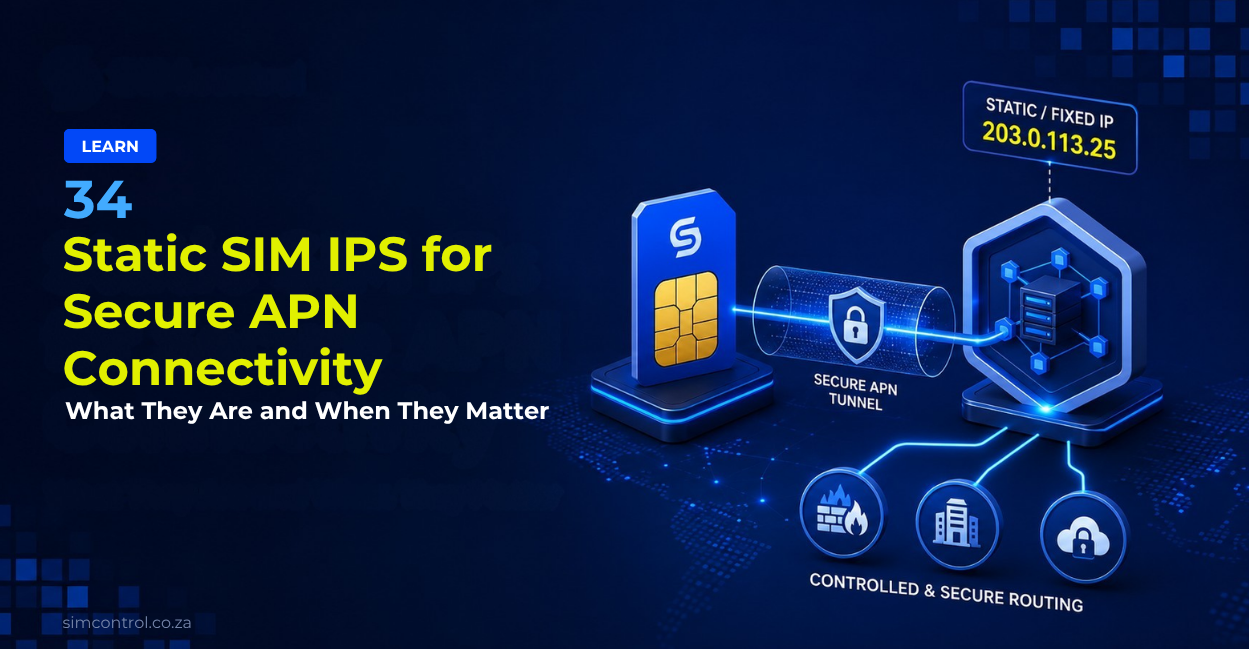
A Static IP SIM provides a fixed address for your SIM, making it easier to remotely manage devices, support secure APN connectivity and build a more stable private cellular network.
Why static SIM IPs matter
For many business and IoT deployments, devices are not just sending data out. They also need to be reachable, manageable and secure.
This is especially important for:
- IoT devices
- M2M deployments
- industrial controllers
- smart city infrastructure
- security cameras
- medical devices
- remote routers and gateways
- fleet and tracking equipment
Enter the Static IP SIM card — the unsung hero of stable, secure and scalable cellular connectivity.
Here is why switching from dynamic to fixed IPs could be a game-changer for your IoT deployment.
NAT vs Static IPs
Most standard mobile connections on the public internet APN use Network Address Translation (NAT).
This means every time a device connects, it is assigned a temporary, dynamic IP address.
For a personal smartphone, this is fine.
But for a business trying to remotely manage a fleet of sensors, medical devices or industrial controllers, a dynamic IP is like trying to call a friend who changes their phone number every hour.
If you do not know the address, you cannot initiate the connection.
1) Constant accessibility: 24/7 reachability
A Static IP provides a permanent “home address” for your SIM.
Whether you are managing smart city infrastructure or remote security cameras, you need to be able to reach your device at any moment.
With a fixed IP, your central system and servers know exactly where to find every device in the field.
This allows for:
- seamless two-way communication
- remote troubleshooting
- remote device management
- consistent access to field hardware
- reduced dependency on manual site visits
For businesses with connected devices in the field, 24/7 reachability can be critical.
2) Security first: the power of private static IPs
Security should not be an afterthought.
By default, high-end connectivity solutions provide Private Static IPs.
How it works
Your devices are assigned fixed addresses within a private, managed network environment.
The benefit
Your hardware is not exposed directly to the public internet.
This helps shield your devices from unauthorised access, unwanted pings and external scanning, while still allowing your internal systems to communicate with your SIMs through the correct secure routing path.
For enterprise and IoT deployments, this is where Managed Private APN connectivity becomes important.
3) Flexibility: when to go public
While private IPs are the preferred option for secure IoT connectivity, some use-cases require a device to be reachable from a public internet connection.
Modern SIM management platforms can support different access models depending on the use-case.
This means a specific SIM can be configured differently where required, for example moving from a private static IP setup to a public static IP setup if the business case requires it.
This flexibility ensures that whether you are running a remote display, an industrial gateway or a financial terminal, you can choose the type of access that best matches the requirement.
4) Cost-efficiency and integration
Traditionally, fixed IPs were an expensive add-on.
However, the industry is shifting.
The SIMcontrol Private APN includes private static IPs as a standard feature, integrating them directly into a broader data management platform.
This means you get:
- no extra fees for the basic private static IP setup
- centralised management to track and manage every connection in real time
- scalability to grow from ten devices to hundreds of thousands across 2G, 4G, 5G and NB-IoT networks
- better visibility across connected SIMs
- stronger control over how devices connect and communicate
This makes static SIM IPs part of a managed connectivity strategy, rather than a standalone technical add-on.
When static SIM IPs are most useful
Static SIM IPs are especially useful when you need:
- remote access to field devices
- secure communication between devices and business systems
- predictable routing
- private APN connectivity
- two-way communication
- reduced exposure to the public internet
- remote troubleshooting
- scalable IoT fleet management
They are particularly relevant for connected devices that form part of business-critical operations.
Static SIM IPs and Managed APN connectivity
A Static IP SIM is most powerful when paired with a Managed APN.
Together, they create a more controlled connectivity environment where businesses can manage:
- how devices connect
- where traffic is routed
- which systems can access the device
- how SIMs are monitored
- how usage is controlled
- how devices are supported remotely
This helps businesses move beyond basic mobile data and into a managed, professional private cellular network.
Common mistakes
- Using standard public APN SIMs for devices that need remote access
- Assuming dynamic IPs are suitable for business-critical IoT deployments
- Exposing devices directly to the public internet without proper controls
- Treating static IPs as a standalone feature instead of part of a managed APN strategy
- Not planning for scale when moving from a small pilot to a larger deployment
FAQ
What is a Static IP SIM?
A Static IP SIM is a SIM card with a fixed IP address. This allows the device to keep the same network address instead of receiving a new dynamic IP each time it connects.
Why do IoT devices need static IPs?
IoT devices often need to be reachable for remote management, troubleshooting or secure two-way communication. A static IP makes it easier for authorised systems to find and communicate with the device.
What is the difference between a private static IP and a public static IP?
A private static IP is used within a private or managed network environment and is not directly exposed to the public internet. A public static IP can be reachable from the public internet, depending on configuration and security controls.
Is a private static IP more secure?
Yes, in many IoT and enterprise use-cases, a private static IP is more secure because the device is not directly exposed to the public internet. Access can be controlled through private routing, firewalling and APN-level policies.
Does SIMcontrol Private APN include static IPs?
Yes. The SIMcontrol Private APN includes private static IPs as a standard feature, integrated into the broader SIM management and connectivity control platform.
Can static SIM IPs help reduce site visits?
Yes. If your devices can be reached and managed remotely, support teams may be able to troubleshoot, reset or update devices without sending someone to site.
The bottom line
A Static IP connected SIM is more than just a fixed number.
It is the foundation of a managed, professional private cellular network.
It removes the connectivity hurdles of dynamic IP cycling and replaces them with a secure, predictable and highly controllable environment.
If your business relies on being “always-on”, it may be time to move past the limitations of standard cellular connectivity and embrace the stability of a fixed IP.
Related reading
- /learn/private-apn-south-africa/
- /learn/firewalling-on-mobile-sim-cards/
- /learn/blocking-traffic-on-mobile-data/
- /learn/sim-management-platform-south-africa/
- /learn/mikrotik-ltap-mini-managed-apn/
Speak to SIMcontrol about IoT SIMs, Private APN, pooled data, and SIM management for your business devices.
Request a call back today